Manufacturing: The Age of Antifragile Factories
Published on 26/03/2026 in Customer talks
Turbulence in the European manufacturing sector, where geopolitical tensions, economic uncertainty, tighter regulations and pressure on supply chains are forcing manufacturers to reinvent themselves. Digital transformation helps industry grow stronger in times of crisis.
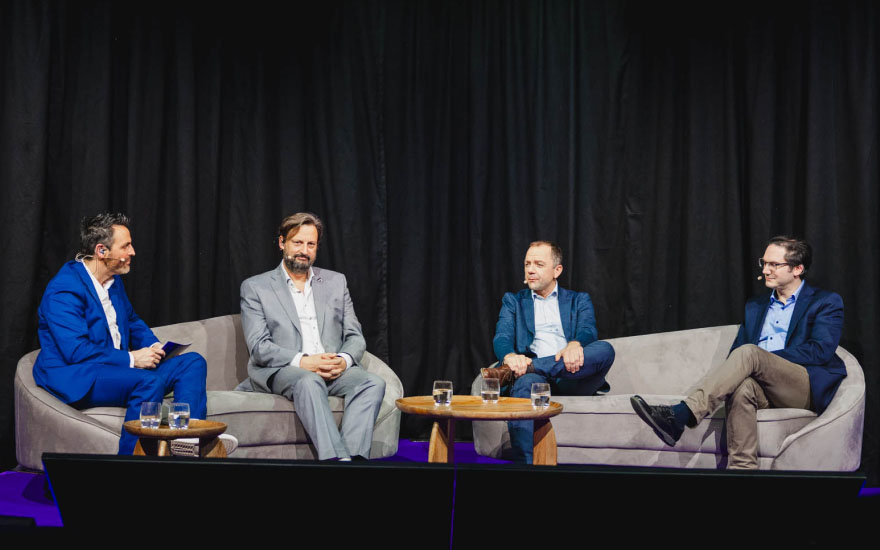
The geopolitical and economic context is forcing our manufacturing industries to make fundamental choices. According to Sandro Manzo, Manufacturing Lead at Proximus NXT, today's manufacturing sector is faced with the challenge not just of more efficient production, but of structural management of uncertainty. "A company’s adaptability shouldn’t be confined to reacting to disruptions," he comments. "Being resilient is no longer enough. We need factories that are designed to get better and stronger with each successive crisis: technologically, organizationally and culturally."
We need factories that are designed to get better and stronger with each successive crisis: technologically, organizationally and culturally.
Sandro Manzo, Manufacturing Lead at Proximus NXT

The antifragile factory is a concept much talked about in this context. Experts describe it as a pragmatic approach to the production process, based on adaptability, resilience and, above all, constant evolution. According to Johan De Geyter of innovation center Sirris it's easy to focus on what's going wrong, such as import duties, regulations or high energy costs. "But alongside these challenges, enormous opportunities can be found," he says.
"Digital technologies strengthen us in areas where European industry has traditionally excelled, such as personalization, quality and circularity. Examples include the use of digital twins and the 'lot size one' concept, which combines mass production and customization."
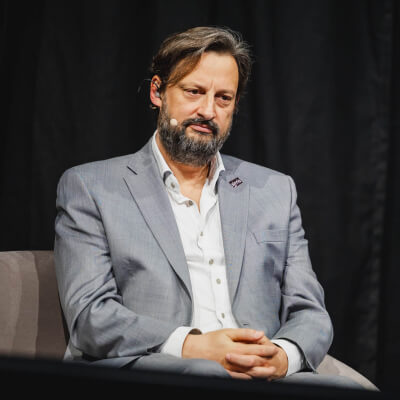
Digital technologies strengthen us in areas where European industry has traditionally excelled.
Johan De Geyter, Business Unit Manager at innovation center Sirris
The basics of adaptability
At Umicore, which is present in numerous market segments including catalysts, recycling and battery materials, adaptability is not an abstract notion. Joris Peeters, its CIO, emphasizes the importance of data as an absolute foundation. "Without data, there's no market visibility, no proactivity, no steering."
In a company with a history going back over 200 years, we also have to deal with a legacy: production facilities that have been in place for decades and can't be replaced at the drop of a hat. "This is exactly why it's crucial to gradually increase our maturity, make data accessible and back up our decisions with information provided by the plant itself."
Security right from the design stage and worker awareness are indispensable in any modern plant.
Jehan Snyers d'Attenhoven, Global Infrastructure Director at FN Browning Group
Resilience Through Security
As manufacturing companies move towards digital, OS security becomes all the more important. As Joris Peeters points out, compliance is not a goal in itself in this context, but the result of enhanced resilience. Through the introduction of standards and a governance structure, IT specialists, engineers and plant managers share responsibility for cybersecurity. Regulations such as the NIS2 directive not only consolidate adaptability, they can also be an asset in the value chain, as customers and partners expect demonstrable maturity.
As Jehan Snyers d'Attenhoven, Global Infrastructure Director at FN Browning Group, illustrates, cyber risks sometimes occur where you least expect them. A seemingly harmless coffee machine can be the cause of an incident. "When an external technician uses a USB key to update the device firmware during routine maintenance, this is not without risk," he points out.
"If the key contains malware and the coffee machine is connected to the factory network, contamination can rapidly spread and bring production to a standstill." His conclusion is clear: security from the design stage and worker awareness are indispensable in any modern plant.
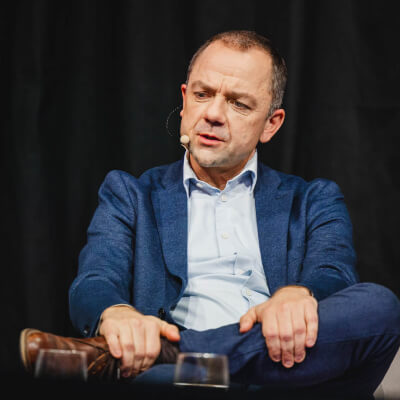
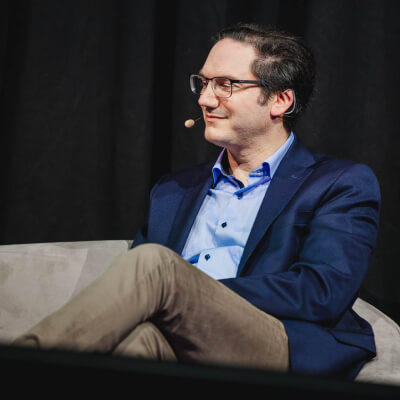
Technology is one thing, but in the end it's the human factor that makes the difference.
Joris Peeters, Chief Information Officer at Umicore
The Human Factor Makes the Difference
Technology alone is not enough. Experts agree that 60 to 70 percent of a successful transformation depends on the human factor. Antifragile factories require a different mindset, cross-team collaboration and change-friendly leadership. "Technology is one thing," explains Joris Peeters, "but in the end it's the human factor that makes the difference. It's important for senior managers to set an example." Innovation doesn't have to be a big bang, though. Small, targeted advances and proof-of-concepts can just as quickly create value.
This report is a summary of a round-table discussion held as part of Think NXT.
Discover the full session Opens a new windowSandro Manzo Manufacturing Lead at Proximus NXT.
Johan De Geyter Business Unit Manager at innovation center Sirris.
Joris Peeters Chief Information Officer at Umicore.
Jehan Snyers d'Attenhoven, Global Infrastructure Director at FN Browning Group.
Want to find out more about key trends in cloud, AI and digital transformation?
More about Think NXT