Remote ship navigation in Ghent thanks to 5G
Published on 25/11/2025 in Customer talks
Can remote navigation improve the safety of waterborne transport in urban environments? The Estuarea project is attempting to answer this question, with Proximus NXT’s 5G technology playing a key role.
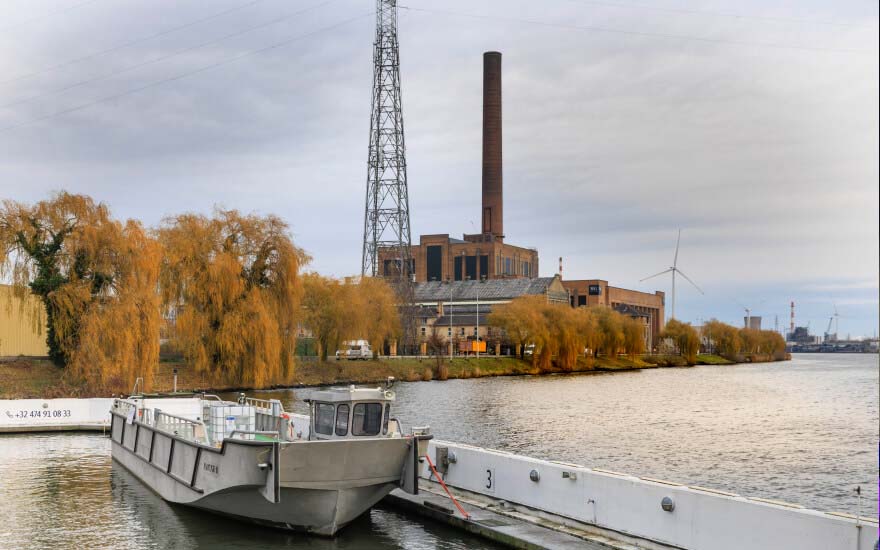
Estuarea was set up following a call for 5G projects by the Federal Public Service for the Economy. Proximus, Seafar, Urban Waterway Logistics, and Mappalink joined forces to make remote ship navigation possible.
Using Ghent’s waterways sustainably
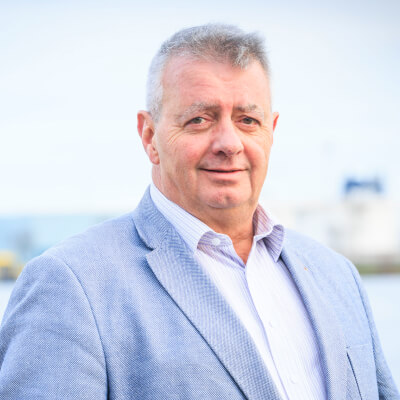
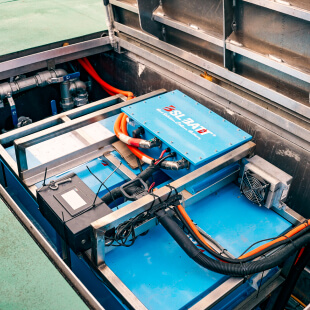
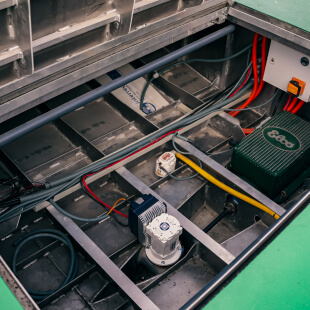
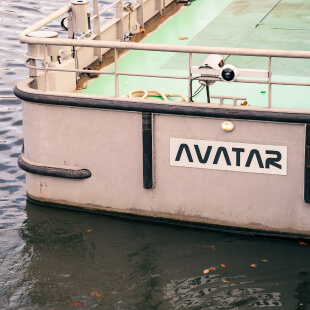
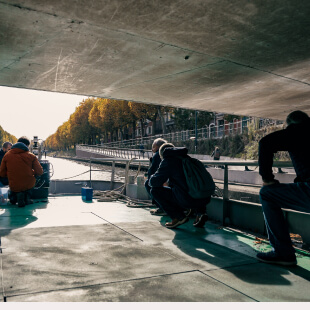
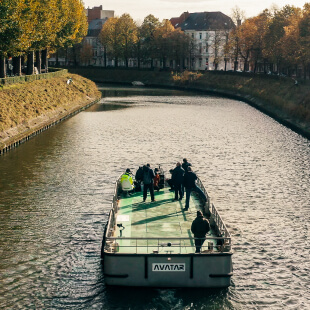
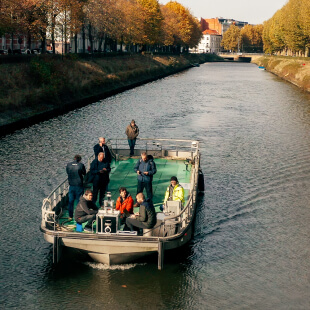
Peter Geirnaert, the chair of Urban Waterway Logistics , has been arguing for years that better use should be made of Ghent’s inland waterways. The non-profit organization unites the city’s leading building materials dealers. “Conventional freight transport is close to its limits for the delivery and removal of materials. Ghent’s inland waterways offer a sustainable and efficient alternative. We’ve opted for an emission-free solution with fully electric vessels.”
There are also challenges, though. “The number of barge captains is falling every year: there are now serious shortages in this profession. In addition, bridges, obstacles, and tourist activities hamper inland waterway traffic. Remote navigation can remove these barriers.”
Remote navigation can remove the barriers associated with conventional inland navigation.
Peter Geirnaert, chair of Urban Waterway Logistics
Technology as a driving force
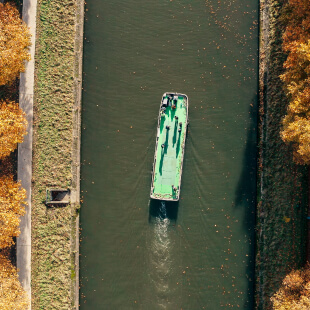
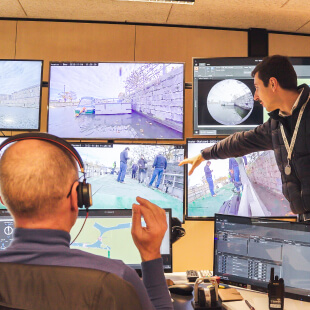
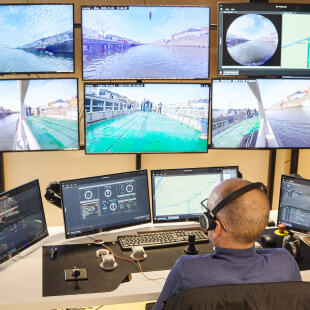
Seafar has already demonstrated the potential of remote activities. The scale-up has been operating vessels with small crews on Flemish waterways from its remote control center in Antwerp for several years now.
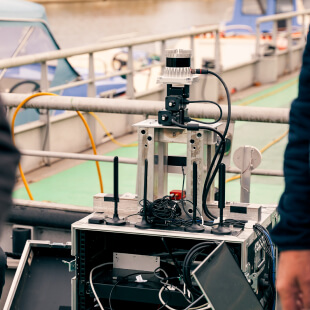
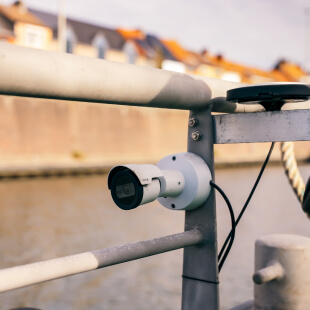
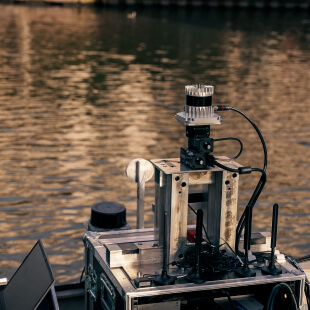
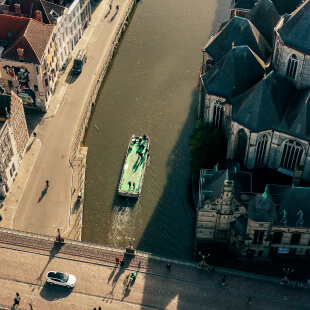
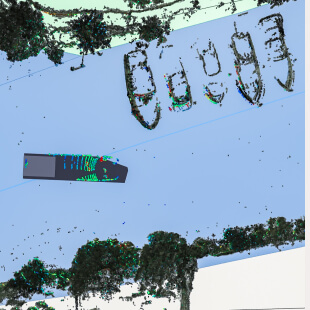
“Ghent’s urban context presents new challenges,” says Ghazaleh Kia, innovation and R&D project manager at Seafar, “especially given the high volume of shipping traffic on the narrow canals. With Estuarea we can extend the onshore operator’s view of the vicinity. The vessels are equipped with stereo cameras that provide data about the distance from nearby vessels. Furthermore, the bridges and high-rise buildings near Ghent’s canals can affect connectivity. Thanks to 5G, we’re able to improve the connectivity between the vessel and the remote control center.”
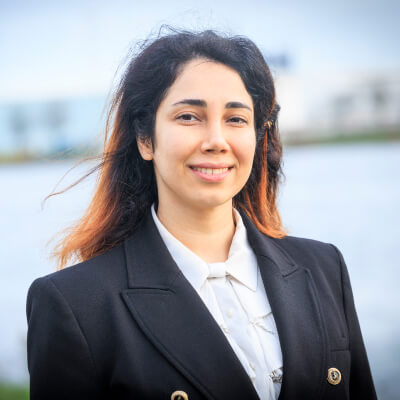
Combining stereo cameras and 5G connectivity improves our remote control. We can then guide our vessels safely through Ghent’s narrow and busy waterways.
Ghazaleh Kia, innovation and R&D project manager at Seafar
Smart sensors and data security
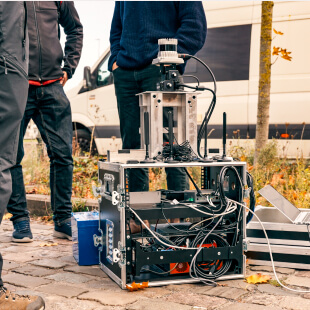
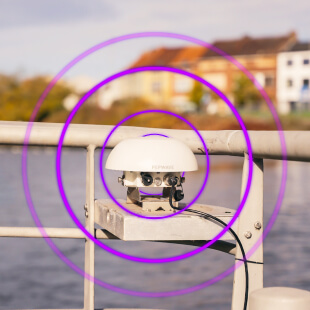
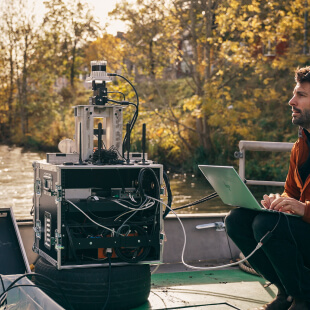
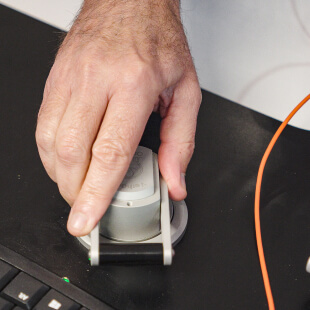
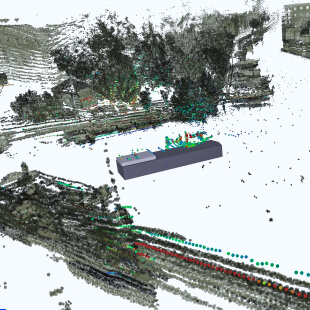
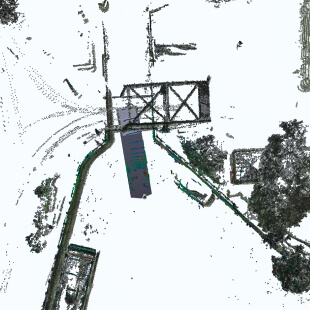
Data capture is carried out using sensor boxes developed by the Leuven-based start-up Mappalink . Senne Van Baelen explains: “One of the critical factors in automation is safety. You always want to minimize the risk of accidents. Situational awareness is therefore essential. Our sensor box monitors the vicinity and shares real-time data with the operator, security services, and other parties. We install the sensors on vessels, at the quayside, or at terminals.”
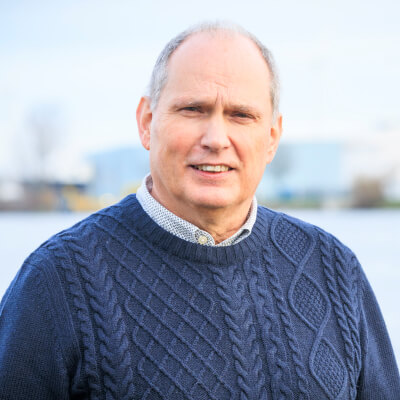
Thanks to 5G LBO, we’re able to achieve the desired response time for remote navigation.
Eric Ibens, 5G business development manager at Proximus NXT
The importance of a powerful network
All partners emphasize that Estuarea’s success depends on the network connection. Eric Ibens, 5G business development manager at Proximus NXT: “To remotely control a vessel, stability, speed, high bandwidth, and low latency are vital. We’ve therefore allocated part of the public 5G capacity exclusively to this project. This functionality, called 5G slicing, allows the physical 5G network to be split into different virtual networks. Each network is optimized for specific applications, thus ensuring prioritization and stability.”
Local data processing is an essential link. A local breakout (LBO) sends the data directly to the User Plane Function, a local computer for network traffic management. “Thanks to this direct data route between vessel and control center, we can achieve the desired response time for remote navigation. The network control function remains within the Proximus core network in order to manage data flows efficiently and securely.”

What can 5G bring to your business?
Find out more about 5GProximus NXT as orchestrator
Seafar and Proximus NXT previously collaborated on the LUSTA 5G project. “Together with various partners, we looked at how we could remotely control a crane and truck using 5G connectivity,” explains Kia. “Proximus NXT’s knowledge and experience proved invaluable. That’s also true this time round.”
Want to know more about LUSTA 5G? Read about Novandi here.
The network is the critical factor: without sufficient performance, remote shipping navigation that’s safe is impossible.
Senne Van Baelen, CTO of Mappalink
Senne Van Baelen regards Proximus NXT as the project’s orchestrator. “The network is the critical factor: without sufficient performance, remote shipping navigation that’s safe is impossible. The switch from 4G to public 5G was already a major step forward, but it’s the integration of LBO that’s the game changer. We can now share enriched data at high speeds, which is necessary for real-time coordination between different systems in complex traffic situations.”
Ghent as a test lab for remote shipping navigation
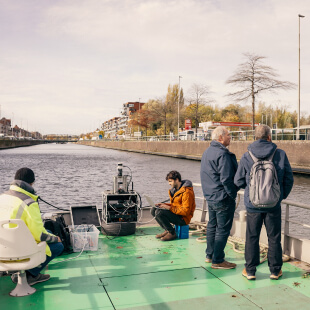
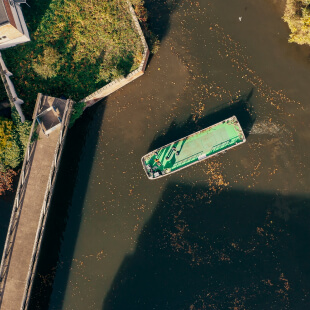
Ghent’s waterways are an ideal testing ground. Geirnaert: “Communication between vessels and operators isn’t straightforward in an urban context. For example, when we pass under a metal bridge with a fifteen-meter vessel, the connection must remain intact. The combined knowledge of Proximus NXT, Seafar, and Mappalink and our practical insights have enabled us to address this complexity.”
Ibens adds: “The extensive network coverage in a city like Ghent is perfect for us. On the other hand, all the buildings and metal structures hinder communication, and the same goes for the busy traffic on the water. With our experts’ technological proficiency and the pooling of knowledge, we’re successfully removing these obstacles. Our network solution provides an answer to these challenges. We’re now ready to steer this project, both literally and figuratively, into the next phases.”
International interest
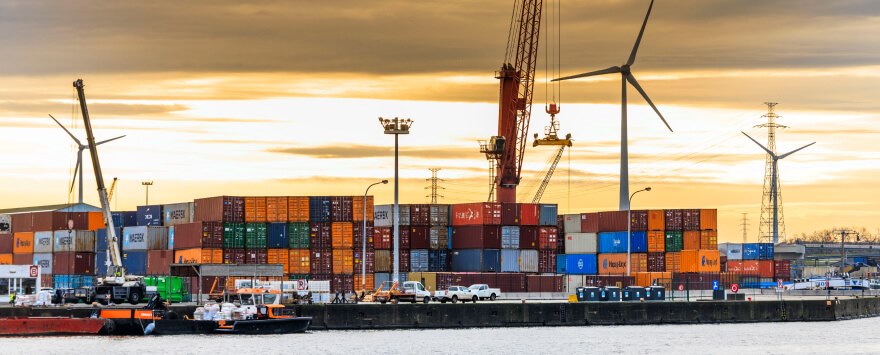
These next steps include further field testing — and also remote mooring. “For this, the positioning of vessels and quay must be accurate to the centimeter,” says Geirnaert. “We’re also working on a loading and unloading process with cranes that we want to control remotely — again, with Proximus NXT’s 5G network as the backbone.”
The project partners have found that this project is attracting a great deal of interest, both domestically and internationally. “Many cities have a dense water network and struggle with traffic congestion when road transport is used. The Estuarea project opens up prospects for addressing these challenges elsewhere too,” he adds.
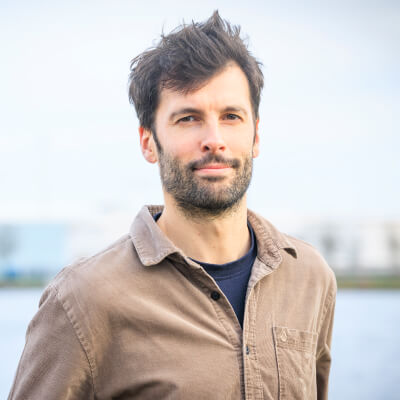
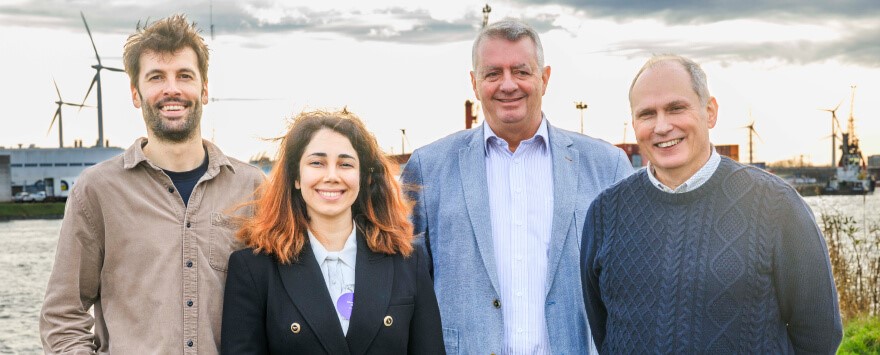
Eric Ibens is 5G business development manager at Proximus NXT. Among other things, he is examining how companies in various sectors can deploy 5G mobile private networks.
Ghazaleh Kia is innovation and R&D project manager at Seafar , a tech company specializing in the remote control of inland vessels.
Senne Van Baelen is CTO of Mappalink , a startup that focusses on connecting different robots, automation systems, and data streams.
Peter Geirnaert is chair of Urban Waterway Logistics , a collaboration between established construction companies. By organizing transport via Ghent’s inland waterways, the non-profit aims to reduce the number of trucks in Ghent’s city center.
5G solutions for companies
5G technology is revolutionizing sectors with ultra-fast high-performance connectivity and enhanced security. Unlock new opportunities, improve efficiency, and stay ahead in a fast-paced digital world.
Discover more on 5G