Google Cloud and Clarence: sovereign innovation without compromise
Published on 13/03/2026 in Customer talks
Organizations want to harness the power of cloud and AI without relinquishing control of their most sensitive data. This is precisely where Google Cloud, Proximus NXT, and Clarence come together – in Europe’s first fully disconnected sovereign cloud environment.
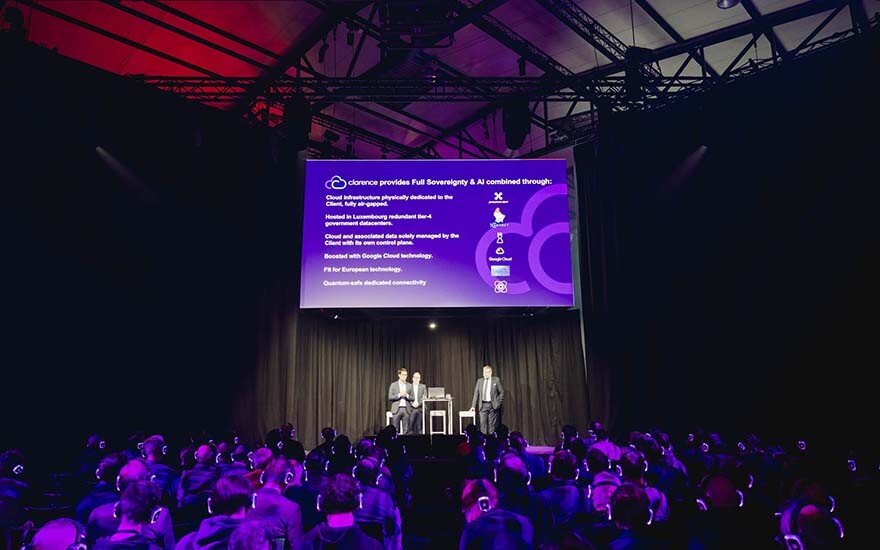
Google Cloud starts from a clear premise: innovation is accelerating exponentially, even as regulation and societal expectations are becoming more stringent, and rightly so. “Cloud adoption has long ceased to be just an IT matter,” says Kurt Rommens, Head of Government and Public Sector BeNeLux at Google Cloud.
“AI and cloud technology are so disruptive that they belong in every boardroom. The real challenge is not the technology itself, but how to deploy it in a secure, compliant, and future-proof way.” Google Cloud has therefore built a model that puts choice at its core: public cloud where possible, additional controls where necessary, and fully sovereign solutions for the most critical workloads.
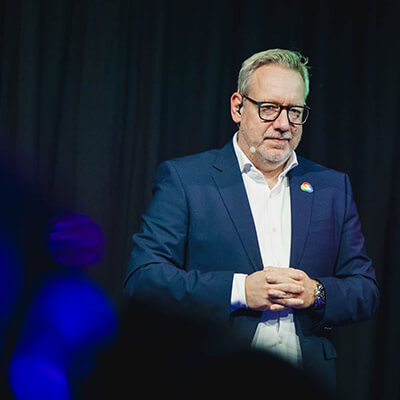
The real challenge is not the technology itself, but how to deploy it in a secure, compliant, and future-proof way.
Kurt Rommens, Head of Government and Public Sector BeNeLux at Google Cloud
This vision aligns seamlessly with Clarence, the partnership between Proximus NXT and LuxConnect, which delivered Europe’s first disconnected cloud last year. Clarence is built on Google Cloud technology but operates entirely independently of public cloud platforms. The infrastructure runs in Luxembourg data centers. Clarence manages it entirely and it is subject exclusively to European and national law.
“Clarence is designed for organizations that do not want to compromise on data, yet still want to innovate to the fullest,” says Joris Duysens, Commercial Lead Cloud at Proximus NXT. “Only the customer manages and sees its data. We have no access to it.”
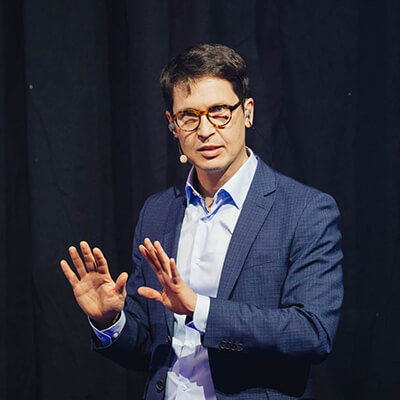
Clarence is designed for organizations that do not want to compromise on data, yet still want to innovate to the fullest.
Joris Duysens, Commercial Lead Cloud at Proximus NXT
End-to-End Sovereignty
The result is a fully air-gapped cloud environment: physically and logically separated from public cloud platforms, while organizations still have access to all modern cloud functionalities. According to Joris Duysens of Proximus NXT, this combination is crucial: “Sovereignty does not stop at infrastructure. It concerns control of data, operational management, and connectivity. All these layers must come together.”
The environment also remains open to European technologies and models, which avoids vendor lock-in and strengthens organizations’ digital autonomy. Combined with Proximus NXT’s quantum-safe connectivity, this creates an end-to-end sovereign solution.
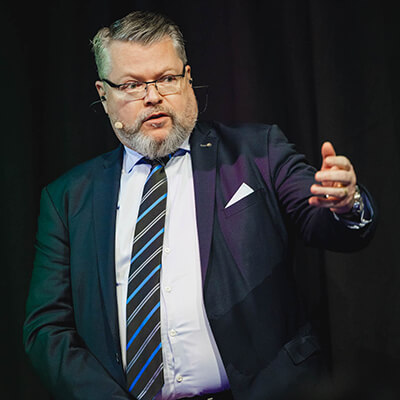
We must embrace technological progress, but always within a strict framework of confidentiality and control.
Jean-Pierre Faber, Director at CSSF
Layered Cloud Strategy
This is not a theoretical discussion, as is demonstrated by the practical experience of the Commission de Surveillance du Secteur Financier (CSSF) – Luxembourg’s primary financial regulatory authority. As the regulator of a financial sector that accounts for a significant share of national GDP, the CSSF plays a clear systemic role. Director Jean-Pierre Faber emphasizes the importance of trust and innovation. “We must embrace technological progress, but always within a strict framework of confidentiality and control.” The CSSF applies a layered cloud strategy: the most sensitive data remains internal, confidential data runs on Clarence, and public data uses traditional hyperscalers.
This approach makes it possible to deploy artificial intelligence in a secure and targeted manner. Out of nearly one hundred identified AI use cases, dozens are now effectively deployed, with clear gains in productivity, quality, and time to market. “It is not about technology; it is about supporting people, improving processes, and fulfilling our responsibility as regulator,” says Faber.
Google Cloud, Clarence, and Proximus NXT show that sovereignty and innovation are not mutually exclusive. “On the contrary: by placing smart architecture and robust governance at the core, organizations can establish a cloud model that prepares regulated markets for the future,” concludes Duysens.
By placing smart architecture and robust governance at the core, organizations can establish a cloud model that prepares regulated markets for the future.
Joris Duysens, Commercial Lead Cloud at Proximus NXT
Think NXT 2025
The story of Clarence and CSSF was presented during Think NXT. Rewatch the presentation and discover how regulated markets are evolving toward a sovereign future in the cloud
Kurt Rommens is Head of Government and Public Sector BeNeLux at Google Cloud
Jean-Pierre Faber is Director at the Commission de Surveillance du Secteur Financier du Luxembourg (CSSF)
Joris Duysens is Commercial Lead Cloud at Proximus NXT and Board Member of Clarence
If you would like to learn more about the key trends in cloud, AI, and digital transformation, read the full Think NXT report.
Read more about Think NXT