AI in the banking industry: driving efficiency and customer experience
Published on 13/02/2026 in Customer talks
The banking industry is in a unique position. Banks combine big data, complex processes, and high expectations in terms of reliability and regulatory compliance. This combination gives AI exceptional value creation potential.
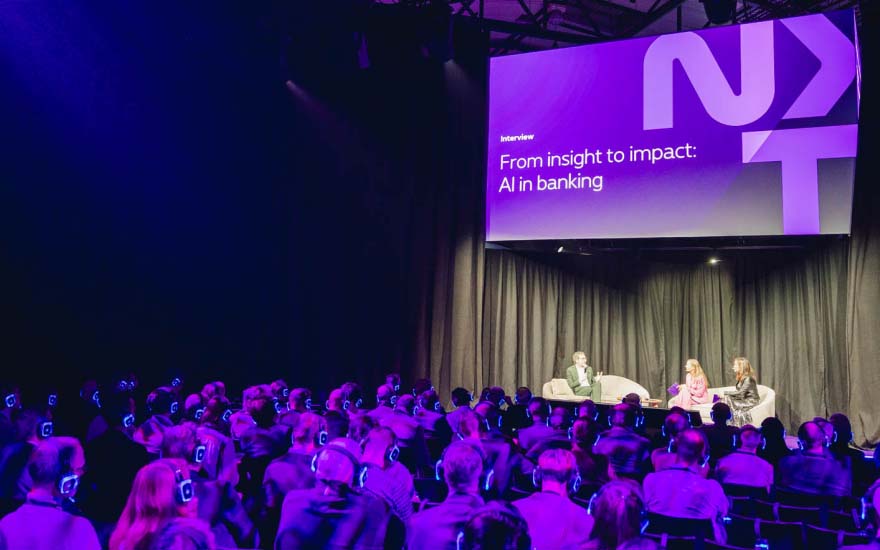
How that value translates into a bank's day-to-day operations becomes clear when we take a closer look at the approach of BNP Paribas Fortis . Today, the bank no longer deploys AI on an experimental basis, but applies it systematically as a lever for transformation. Anthony Belpaire, Head of AI at BNP Paribas Fortis, plays a central role in this process. He manages a fast-growing AI team that focuses on delivering tangible impact for customers, employees, and processes.

AI enables us to make processes smarter, faster, and more consistent, while allowing employees to focus on more value-added tasks.
Anthony Belpaire, Head of AI at BNP Paribas Fortis
According to Anthony Belpaire, the banking industry is among the largest users of AI, second only to big tech. “Large technology companies develop AI solutions, but banks are, by definition, the organizations that apply them at scale,” he explains. “We serve a large customer base, employ thousands of people, and operate in a highly regulated environment. AI helps us make processes smarter, faster, and more consistent, while enabling employees to focus on higher-value activities.” Think personalized customer communications, fraud detection based on data patterns and support in the fight against cybercrime.
From technology to transformation
However, BNP Paribas Fortis views AI not as an incremental improvement, but as a fundamental transformation. Belpaire compares this shift to previous industrial revolutions: those who use new technology merely as a replacement for the old are missing its true potential. “Just as electricity completely redesigned manufacturing processes, we need to leverage AI to reinvent the way we work.”
In concrete terms, this translates into productivity gains that are already being felt today. AI is taking over repetitive tasks that are scattered across thousands of employees. This automates the equivalent of hundreds of full-time jobs in administrative work and creates room for more complex cases and customer-focused advice.
If a system can’t explain how it arrives at a decision, it will never win our trust.
Anthony Belpaire, Head of AI at BNP Paribas Fortis
AI in a regulated environment
Banks operate in a highly regulated context, but this does not have to hinder innovation. On the contrary, regulation can act as a catalyst. Compliance obligations and know-your-customer processes require tremendous effort. AI makes it possible to scale these tasks while maintaining high quality, without explosive growth in cost or personnel.
Belpaire stresses the importance of explainable and reliable AI. “If a system can’t explain how it arrives at a decision, it will never win our trust.” Transparency, explainability, and data quality are therefore crucial building blocks, not only to meet regulatory requirements but, above all, to ensure adoption by employees and customers.
How do you monitor security and trust in an AI-driven world?
Read more about AI and cybersecurity Opens a new windowBanks need high-performance networks, effective cybersecurity and a sovereign data infrastructure in order to deploy AI responsibly.
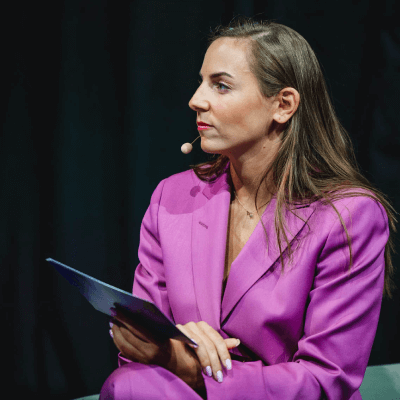
Wilhelmine Dubuisson is Sales Key Account Manager at Proximus NXT
Augmented employees
One striking element in BNP Paribas Fortis' AI strategy is its focus on employees. The bank rolled out its internal AI assistant Yara to all 13,000 employees, combined with intensive training. The result is a sharp increase in AI literacy and a significant reduction in fears about job loss. “For us, AI is 10 percent technology and 90 percent change management,” says Belpaire.
This approach also delivers tangible operational benefits. Millions of contact center calls are automatically transcribed, summarized, and processed within CRM systems. This not only boosts efficiency, but also improves data quality and the ability to proactively target customers.
Wilhelmine Dubuisson, Sales Key Account Manager at Proximus NXT, underlines the importance of a robust and secure technological foundation. “Banks need high-performance networks, effective cybersecurity and a sovereign data infrastructure in order to deploy AI responsibly. Proximus NXT has been supporting financial institutions in these areas for years and sees AI as the logical next step in that collaboration.”
Anthony Belpaire and Wilhelmine Dubuisson shared their vision during Think NXT. Watch the presentation here and find out which AI applications are already creating value in the financial sector today.
View presentation Opens a new windowAnthony Belpaire is Head of AI at BNP Paribas Fortis , a board member at Yago and an advisory board member at organizations including Sustenuto and Group Casier. He holds a degree in civil engineering from Ghent University.
Wilhelmine Dubuisson is Sales Key Account Manager at Proximus NXT. She manages customer relationships and drives sales initiatives aligned with Proximus NXT's strategic objectives. She is also a passionate advocate for women in the tech industry.
Want to take a deeper dive into key trends in tech, AI, and digital transformation? Read the full Think NXT report and discover insights, use cases and expert views.
Read more about Think NXT